

Why Use Hygienic Wall Panels in High-Risk Areas
Updated: Feb 2
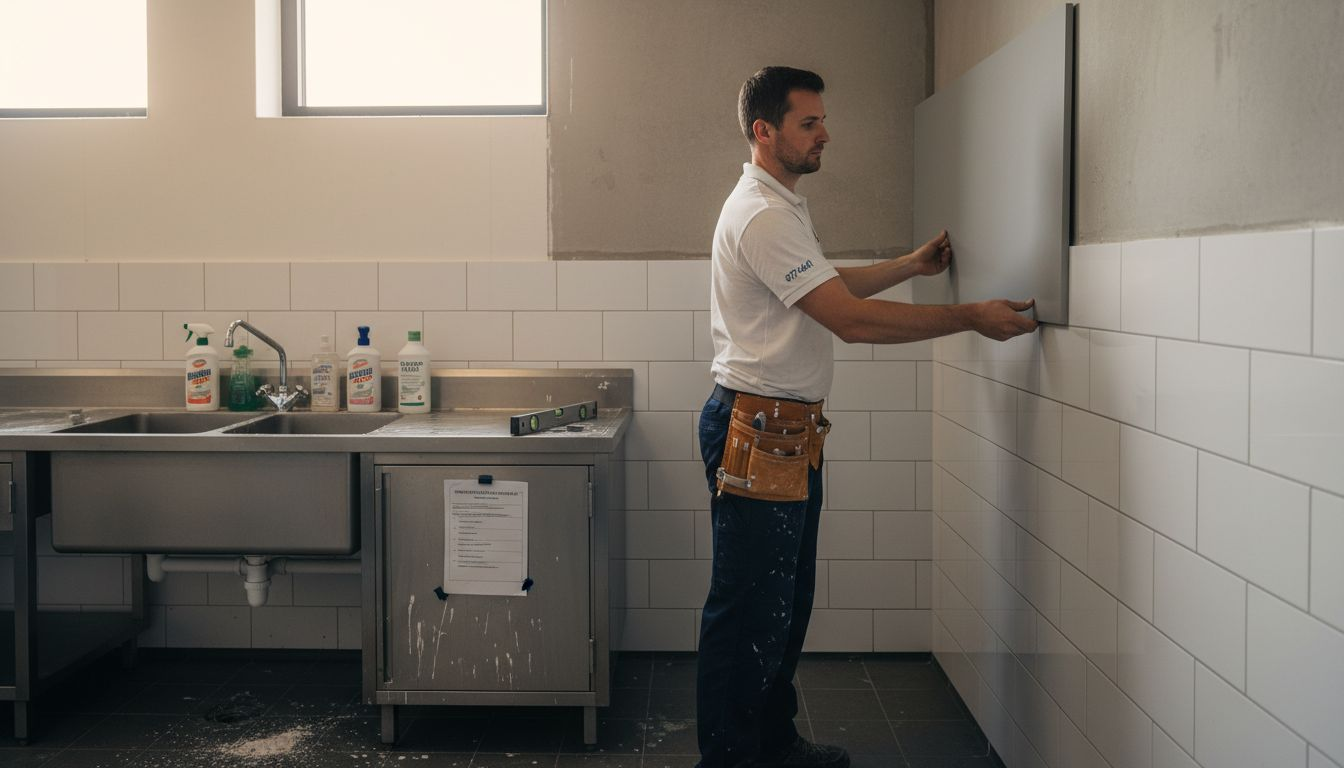
Maintaining spotless surfaces in British hospitals and commercial kitchens is a constant challenge for facility managers. With strict UK hygiene regulations and the risk of contamination always present, choosing the right wall panels becomes vital. Modern hygienic wall panels offer more than just a clean finish — their highly hydrophobic surfaces and seamless construction actively repel bacteria, withstand frequent disinfectant exposure, and keep microbial levels low, helping facilities safeguard health and avoid costly regulatory issues.
Table of Contents
Defining Hygienic Wall Panels And Misconceptions
Categories And Styles Of Hygienic Wall Panels
Core Features: Durability, Waterproofing, And Immunity
Safety Standards And UK Regulatory Compliance
Comparing Costs And Alternatives To Tiling
Mistakes To Avoid When Specifying And Installing
Key Takeaways
Point | Details |
Hygienic Wall Panels Are Essential Infrastructure | Designed for cleanliness and infection control, these panels are crucial in preventing bacterial growth in high-risk environments. |
Cost-Effective and Easy to Install | Modern hygienic wall panels offer a quicker installation and lower long-term maintenance costs compared to traditional tiling. |
Advanced Properties | They feature non-porous, seamless constructions that withstand aggressive cleaning and prevent microbial colonisation. |
Regulatory Compliance | It is vital to adhere to UK hygiene standards during installation to ensure safety and cleanliness in commercial settings. |
Defining hygienic wall panels and misconceptions
Hygienic wall panels represent specialised surface solutions designed for environments demanding exceptional cleanliness and infection control. Understanding hygienic wall cladding requires recognising these panels as more than simple wall coverings - they are strategic infrastructure components engineered to prevent bacterial growth, withstand intensive cleaning, and maintain sterile environments.
Contrary to common misconceptions, hygienic wall panels are not merely decorative additions but critical functional systems. They differ significantly from standard wall coverings through several key characteristics:
Seamless construction preventing bacterial infiltration
Non-porous surface resisting moisture absorption
Chemical-resistant materials supporting aggressive sanitisation protocols
Smooth finishes enabling comprehensive cleaning
Durability against mechanical impacts and cleaning procedures
Many facility managers mistakenly believe these panels are prohibitively expensive or difficult to install. In reality, modern hygienic wall panels offer cost-effective, rapid installation solutions that dramatically reduce long-term maintenance expenses and infection risks.
These specialised panels utilise advanced polymeric technologies, creating impermeable barriers that traditional painted walls or tiled surfaces cannot match. Their engineered composition prevents microbial colonisation, making them indispensable in high-risk zones like commercial kitchens, healthcare facilities, and food processing environments.
Pro tip: Always verify the specific hygiene rating and cleaning compatibility of wall panels before installation to ensure optimal performance in your specific environment.
Categories and styles of hygienic wall panels
Hygienic wall panels come in diverse categories designed to meet specific environmental requirements, ranging from healthcare facilities to food processing environments. Advantages of hygienic wall cladding include versatile design options that accommodate various institutional needs and aesthetic preferences.
The primary categories of hygienic wall panels typically include:
PVC Wall Panels: Lightweight, cost-effective, and extremely durable
Stainless Steel Panels: High-strength, corrosion-resistant options
Composite Panels: Multilayered solutions offering enhanced protection
Polyethylene Panels: Chemical-resistant and ideal for extreme environments
Fibreglass Reinforced Panels: Providing superior impact resistance
Each panel type offers unique characteristics tailored to specific industrial requirements. PVC panels, for instance, provide exceptional moisture resistance and are relatively easy to install, making them popular in healthcare, food service, and pharmaceutical settings. Stainless steel variants offer maximum durability and can withstand aggressive cleaning protocols, particularly crucial in sterile environments.
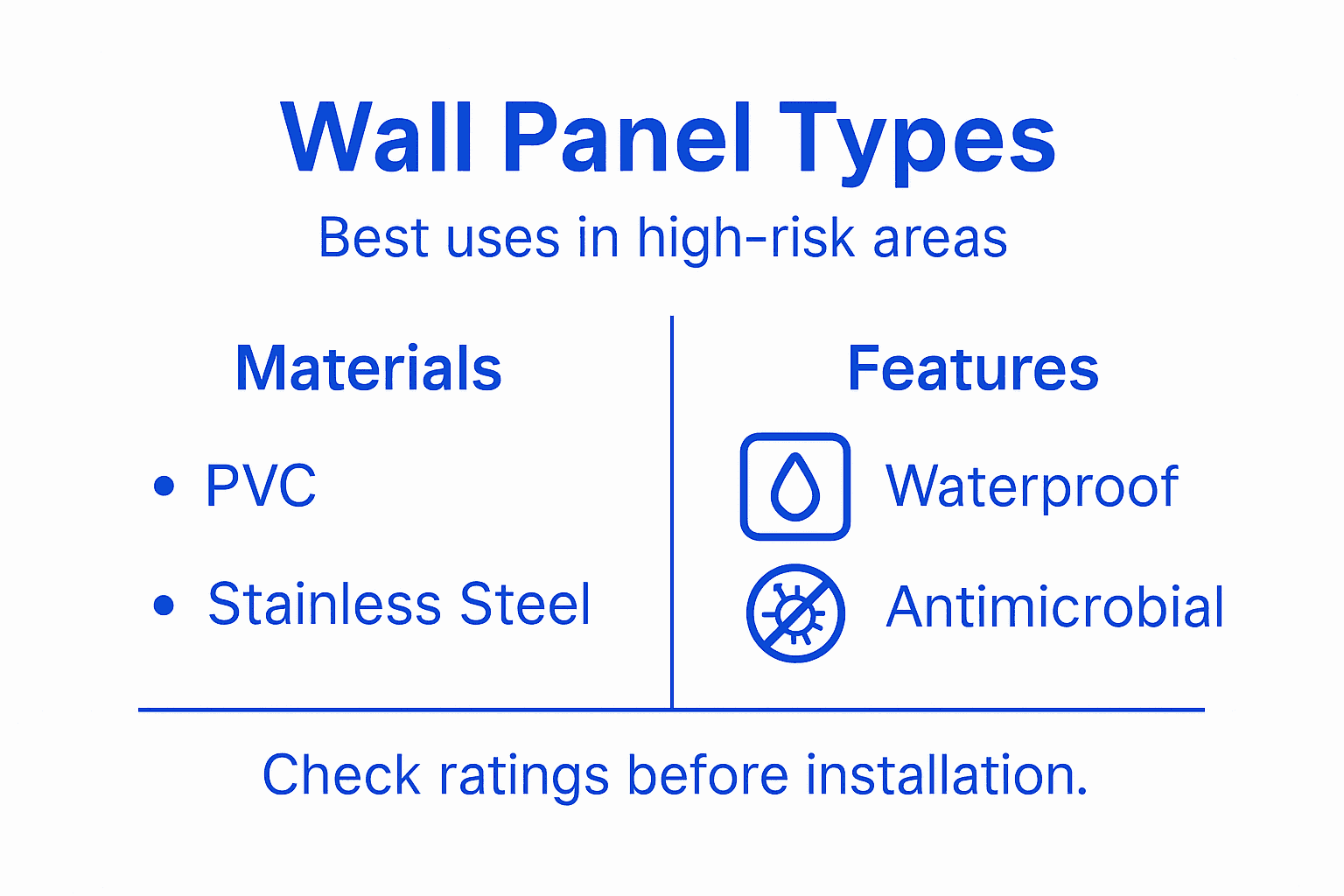
Colour and finish options have also expanded significantly, allowing facility managers to select panels that not only meet hygiene standards but also complement existing architectural designs. What colour options are there for hygienic wall cladding demonstrates the increasing sophistication of these specialist wall solutions, moving beyond purely functional considerations.
Pro tip: Consider your specific environmental requirements and cleaning protocols when selecting hygienic wall panel categories to ensure optimal performance and longevity.
Here is a comparison of hygienic wall panel types and their ideal applications:
Panel Type | Key Benefit | Typical Application |
PVC Wall Panels | Lightweight, easy to fit | Hospitals, canteens, laboratories |
Stainless Steel Panels | Maximum durability | Cleanrooms, abattoirs |
Composite Panels | Enhanced multi-layer defence | Pharmaceutical, clinics |
Polyethylene Panels | Superior chemical resistance | Industrial kitchens, labs |
Fibreglass Reinforced | High impact strength | Sports facilities, food factories |
Core features: durability, waterproofing, and immunity
Hydrophobic wall cladding surfaces represent a technological breakthrough in maintaining sterile environments, offering unprecedented protection against microbial contamination and environmental degradation. These advanced panels are engineered to withstand extreme conditions while maintaining structural integrity and hygiene standards.
The core features of high-performance hygienic wall panels encompass several critical characteristics:
Water Resistance: Completely repels moisture and prevents bacterial growth
Mechanical Durability: Withstands significant physical impacts
Chemical Resilience: Tolerates aggressive cleaning and disinfection protocols
Antimicrobial Protection: Neutralises potential microbial threats
Surface Integrity: Maintains smooth, non-porous finishes
Waterproofing represents a paramount consideration in these specialist panels. The hydrophobic properties ensure that water, dirt, and potential contaminants cannot penetrate or accumulate on the surface, creating an inhospitable environment for bacterial proliferation. Antimicrobial wall covering technologies demonstrate how advanced materials can incorporate nanoplatinum technologies that provide comprehensive microbial protection.
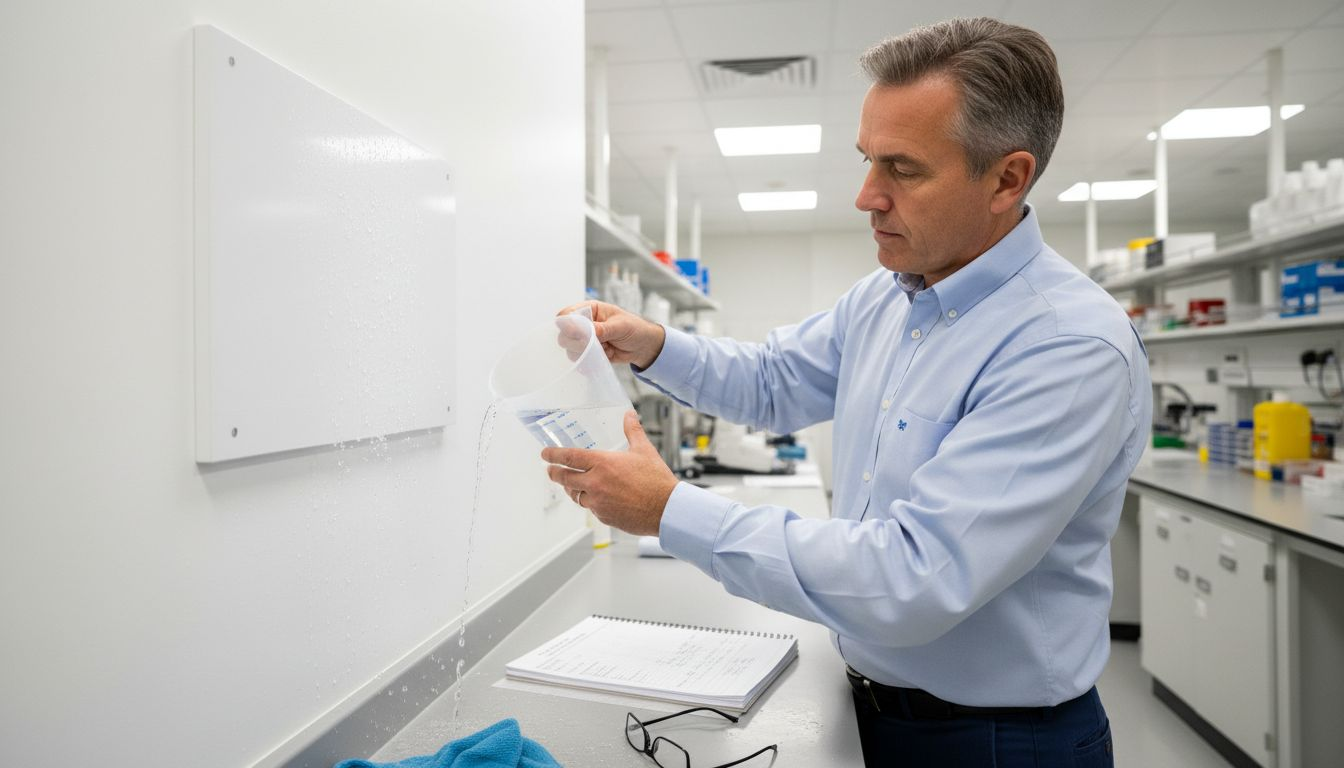
Durability extends beyond mere physical strength. These panels are designed to maintain their protective qualities under challenging environmental conditions, including temperature variations, UV exposure, and frequent cleaning cycles. The combination of robust material science and sophisticated surface engineering ensures that hygienic wall panels deliver consistent performance in high-risk areas such as healthcare facilities, food processing plants, and pharmaceutical environments.
Pro tip: Select hygienic wall panels with independently verified antimicrobial certifications to ensure maximum protection and compliance with industry standards.
Safety standards and UK regulatory compliance
UK hygienic wall cladding standards represent a comprehensive framework of regulations designed to ensure maximum safety and cleanliness in critical commercial environments. These stringent guidelines govern installation, material composition, and performance requirements across multiple high-risk sectors including healthcare, food production, and pharmaceutical manufacturing.
Key regulatory compliance requirements encompass several critical elements:
Seamless Construction: Heat-welded joints preventing bacterial infiltration
Surface Characteristics: Smooth, non-porous finishes enabling thorough sanitisation
Material Resistance: Chemical and moisture-resistant compositions
Microbial Protection: Self-disinfecting surface properties
Mechanical Durability: Ability to withstand intensive cleaning protocols
In the food processing sector, food safety cladding standards are particularly rigorous. Panels must demonstrate compliance with HACCP (Hazard Analysis and Critical Control Points) certification, ensuring they can eliminate dangerous bacterial strains and maintain pristine hygiene standards. These requirements go beyond simple aesthetic considerations, directly impacting potential contamination risks and overall public health protection.
The regulatory landscape demands meticulous attention to detail. Facility managers must navigate complex compliance frameworks that involve not just material selection, but also precise installation techniques, ongoing maintenance protocols, and comprehensive documentation demonstrating adherence to national hygiene standards.
Pro tip: Maintain detailed installation and maintenance records to demonstrate regulatory compliance during official safety inspections.
Comparing costs and alternatives to tiling
Tile versus panel cost comparisons reveal significant financial advantages for hygienic wall panels in commercial and residential settings. Traditional tiling methods have long been considered the standard, but emerging panel technologies are fundamentally transforming cost-effectiveness and installation strategies across multiple industries.
Key cost considerations between tiles and hygienic wall panels include:
Initial Purchase Price: Panels often cheaper per square metre
Installation Labour: Significantly reduced fitting time and complexity
Long-term Maintenance: Minimal ongoing costs compared to tile replacement
Cleaning Efficiency: Faster and more comprehensive sanitisation
Replacement Expenses: Lower lifetime investment requirements
The financial benefits extend beyond simple monetary calculations. Traditional tiled surfaces require frequent grout maintenance, which introduces additional ongoing expenses and potential hygiene risks. Hygienic wall panels eliminate these challenges by providing seamless, easy-to-clean surfaces that maintain structural integrity far longer than conventional tiling solutions.
Most facility managers discover that while initial panel investments might seem comparable to tiling, the long-term economic advantages are substantially more pronounced. Reduced downtime during installation, minimal repair requirements, and enhanced durability make hygienic wall panels a compelling alternative to traditional ceramic or porcelain tiles in high-traffic commercial environments.
Pro tip: Calculate total lifetime costs, not just initial installation expenses, when comparing wall covering options.
Below is a cost and maintenance comparison of hygienic panels versus traditional tiling:
Factor | Hygienic Wall Panels | Standard Tiles |
Installation Time | Minimal disruption, rapid | Prolonged, requires skilled labour |
Cleaning Regimen | Simple, wipe clean | Intensive grout scrubbing needed |
Maintenance Frequency | Rare repairs required | Frequent grout and tile repairs |
Lifetime Costs | Lower over time | Higher due to upkeep |
Mistakes to avoid when specifying and installing
Hygienic wall sheet installation techniques require meticulous planning and precision to ensure optimal performance and long-term durability. Facility managers and installation professionals must navigate a complex landscape of potential pitfalls that could compromise the integrity of hygienic wall panels.
Common mistakes during specification and installation include:
Surface Preparation: Neglecting thorough wall cleaning and smoothing
Measurement Errors: Inaccurate panel sizing leading to uneven joins
Adhesive Selection: Using incompatible bonding materials
Environmental Considerations: Ignoring temperature and humidity conditions
Cutting Techniques: Improper panel trimming and edge finishing
Professional installers recognise that surface preparation represents the most critical phase of the installation process. Walls must be completely clean, smooth, and free from moisture, dust, or existing adhesive residues. Any irregularities can compromise panel adhesion, potentially leading to premature failure or reduced hygienic performance.
Technical specifications demand precise environmental control during installation. Ambient temperature, humidity levels, and substrate conditions can significantly impact adhesive curing and panel performance. Installers must carefully monitor these parameters, ensuring that manufacturer recommendations are strictly followed to guarantee optimal panel integration and long-term structural integrity.
Pro tip: Always conduct a comprehensive site survey and substrate assessment before commencing hygienic wall panel installation to identify potential challenges in advance.
Elevate Hygiene Standards with Trusted Wall Solutions
Maintaining impeccable cleanliness in high-risk areas is a challenge every facility manager faces. The article highlights key concerns like seamless construction, waterproofing, and chemical resistance essential for infection control in environments such as healthcare and food preparation. At HygienicSheets, we understand these critical requirements and provide top-quality PVC wall cladding designed to withstand aggressive sanitisation while ensuring durability and easy maintenance. Our range includes various colours, finishes, and accessories to perfectly suit your specific hygiene protocols and aesthetic preferences.
Discover how you can avoid costly mistakes and enhance your environment with our expertly manufactured panels and installation accessories. Explore our comprehensive selection at HygienicSheets, your reliable UK partner for fast delivery and competitive pricing. Act now to secure reliable, moisture-proof, and antimicrobial wall cladding solutions that meet stringent UK standards and protect your facility from contamination risks.
Frequently Asked Questions
What are hygienic wall panels, and why are they important in high-risk areas?
Hygienic wall panels are specialised surfaces designed for cleanliness and infection control. They prevent bacterial growth, endure intense cleaning protocols, and maintain sterile environments, making them essential in high-risk areas such as healthcare facilities and food processing environments.
How do hygienic wall panels differ from traditional wall coverings?
Unlike traditional wall coverings, hygienic wall panels feature seamless construction, non-porous surfaces, chemical resistance, and durability against mechanical impacts. These qualities make them more effective at preventing contamination and easier to maintain in high-risk environments.
What materials are commonly used in hygienic wall panels?
Common materials for hygienic wall panels include PVC, stainless steel, composite materials, polyethylene, and fibreglass reinforced panels. Each material offers unique benefits tailored to specific applications, such as chemical resistance, durability, and moisture control.
What maintenance is required for hygienic wall panels?
Maintaining hygienic wall panels typically involves regular cleaning with suitable sanitising agents. Their non-porous surfaces and seamless construction make them easier to clean and less prone to mould and bacterial growth compared to traditional tiled surfaces.
Recommended
Comments