

Hygienic Wall Systems UK 2026: Cut Infection Risk by 6.4%
Updated: Mar 4
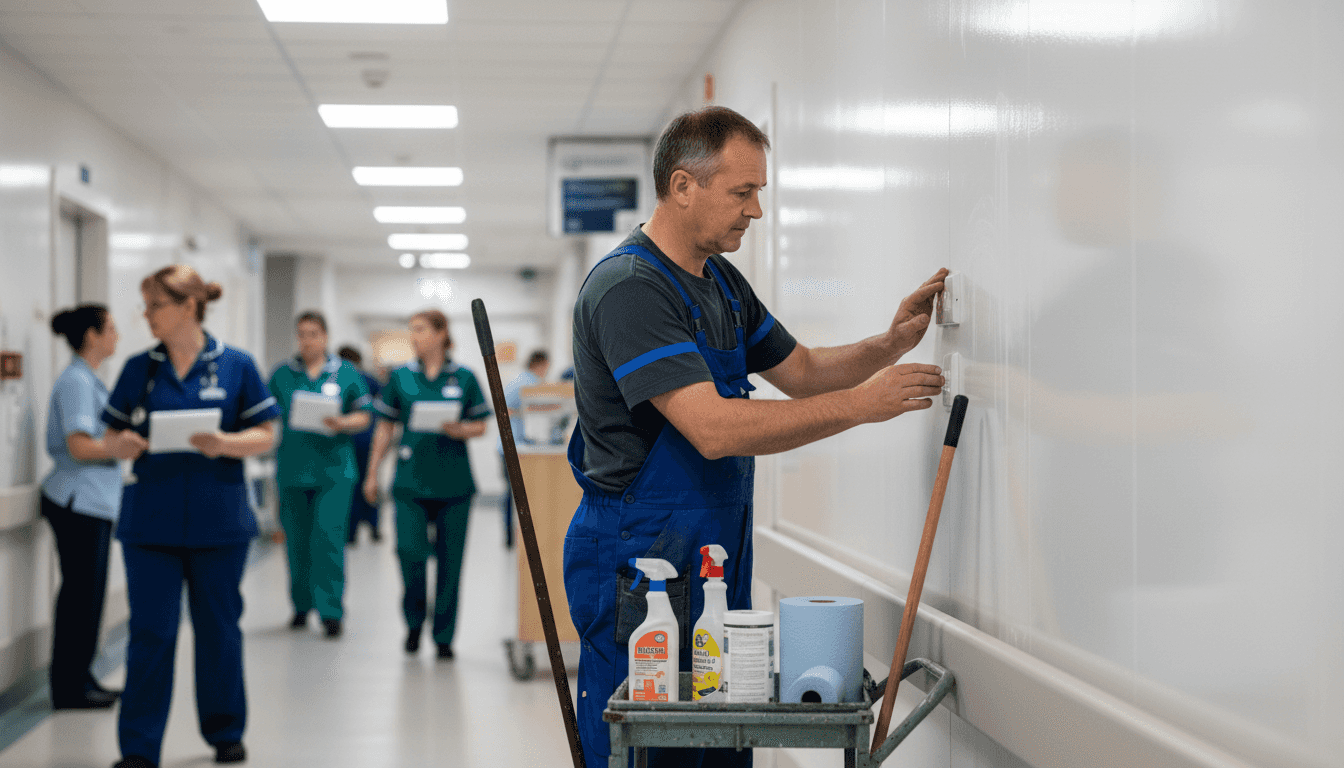
Hygienic Wall Systems in the UK: 2026 Findings Show 6.4% Infection Risk Reduction
Every year, 6.4% of patients in UK hospitals acquire healthcare-associated infections, many traceable to contaminated surfaces. Hygienic wall systems offer a proven defence against microbial colonisation, helping facility managers and contractors meet stringent UK hygiene standards whilst reducing long-term maintenance costs. This guide examines key features, regulatory requirements, and practical selection criteria to help you deploy effective hygienic cladding in healthcare and food service environments.
Table of Contents
Definition And Importance Of Hygienic Wall Systems
UK Regulatory Compliance And Standards
Material And Surface Properties For Hygiene And Durability
Installation Techniques Ensuring Seamless, Crack-Free Surfaces
Comparison With Traditional Wall Finishes
Common Misconceptions About Hygienic Wall Systems
Practical Considerations And Buying Guidance
Explore Hygienic Wall Cladding Solutions For UK Facilities
Frequently Asked Questions About Hygienic Wall Systems
Key Takeaways
Point | Details |
Seamless surfaces prevent contamination | Hygienic wall systems use non-porous, heat-welded cladding to eliminate microbial colonisation points. |
UK regulations demand compliance | HTM 63, HTM 66, and HACCP standards require specific wall finishes for hospitals and food areas. |
Heat-welded joints ensure durability | Molecular bonding creates impermeable seams superior to mechanical fixings or adhesive joints. |
Lower maintenance costs | Hygienic cladding reduces maintenance expenses by 30 to 40% compared to traditional ceramic tiles. |
Material choice drives longevity | PVCu, PETG, and antimicrobial polymers offer chemical resistance and withstand harsh cleaning protocols. |
Definition and Importance of Hygienic Wall Systems
Hygienic wall systems comprise seamless, non-porous cladding engineered to inhibit microbial growth on vertical surfaces. Unlike traditional paint or tiles with grout lines that harbour bacteria, these systems present uninterrupted, smooth finishes that deny pathogens colonisation sites. In UK hospitals, healthcare-associated infections affect around 6.4% of patients yearly, making surface hygiene a critical patient safety concern.
Food service environments face similar contamination risks. Commercial kitchens, food preparation zones, and processing facilities rely on hygienic wall cladding to prevent cross-contamination and maintain regulatory compliance. The right system forms an impermeable barrier resistant to moisture, chemicals, and physical impacts.
Key features distinguish truly hygienic walls from ordinary cladding:
Seamless surface continuity eliminating gaps where bacteria multiply
Chemical resistance to hospital-grade disinfectants and food-safe cleaning agents
Easy-clean finishes that shed residues without degrading
Impact resistance maintaining surface integrity under operational stress
Exploring the benefits of hygienic wall panels reveals how these systems directly reduce infection transmission routes. When surfaces can be reliably disinfected without harbouring pathogens in hidden crevices, facility managers gain tangible control over hygiene outcomes. This translates to safer patient environments, compliant food processing areas, and fewer costly infection outbreaks.
“The most effective hygienic wall systems combine material science with installation precision, creating surfaces that actively resist contamination rather than merely concealing it.”
For UK facilities operating under strict inspection regimes, hygienic wall systems represent essential infrastructure rather than optional upgrades. Regulators increasingly demand demonstrable hygiene measures, and outdated wall finishes expose organisations to both health risks and compliance failures.
UK Regulatory Compliance and Standards
UK healthcare and food facilities operate within a comprehensive regulatory framework that directly impacts wall finish selection. Understanding these standards helps you specify compliant systems and avoid costly retrofits.
HTM 63 and HTM 66 specify requirements for hygienic, impact-resistant hospital wall finishes, including approved materials like PVCu and antimicrobial cladding. These Health Technical Memoranda establish minimum performance criteria for healthcare environments where infection control takes priority. HTM 63 addresses internal surfaces in healthcare buildings, whilst HTM 66 focuses specifically on wall protection systems capable of withstanding clinical equipment impacts without compromising hygiene.
Food industry regulations impose equally rigorous demands. The Food Safety Act 1990 and Food Hygiene Regulations require food contact surfaces and surrounding areas to be constructed from materials that facilitate cleaning and prevent contamination. Wall finishes must withstand repeated exposure to food acids, oils, and aggressive cleaning chemicals without degrading or harbouring pathogens.
HACCP principles mandate hygienic surfaces throughout food processing chains. Your hospital wall cladding standards must demonstrate:
Non-porous construction preventing moisture absorption
Chemical stability under disinfectant exposure
Seamless installation eliminating bacterial harbourage
Documentation proving material compliance and performance
Recommended materials meeting these standards include:
PVCu (unplasticised polyvinyl chloride) offering excellent chemical resistance
PETG (glycol-modified polyethylene terephthalate) providing impact strength
Antimicrobial additives inhibiting surface bacterial colonisation
High-pressure laminates with sealed edges preventing moisture ingress
Regular inspections by Care Quality Commission assessors in healthcare or Environmental Health Officers in food premises scrutinise wall conditions. Non-compliant finishes trigger enforcement notices, operational restrictions, or facility closures. Specifying certified hygienic systems from the outset protects your organisation from regulatory penalties whilst ensuring genuine infection control.
Pro Tip: Request manufacturer documentation proving HTM compliance and antimicrobial efficacy testing before committing to any wall cladding system.
Material and Surface Properties for Hygiene and Durability
Material science underpins hygienic wall system performance. The right polymers and surface treatments create environments actively hostile to microbial colonisation whilst enduring decades of aggressive cleaning.
Smooth, non-porous, low surface energy PVCu surfaces prevent microbial adherence and enable effective disinfection. Surface energy determines how readily liquids spread and contaminants bind to materials. Low energy surfaces repel water and organic matter, making bacterial attachment mechanically difficult and cleaning protocols more effective.
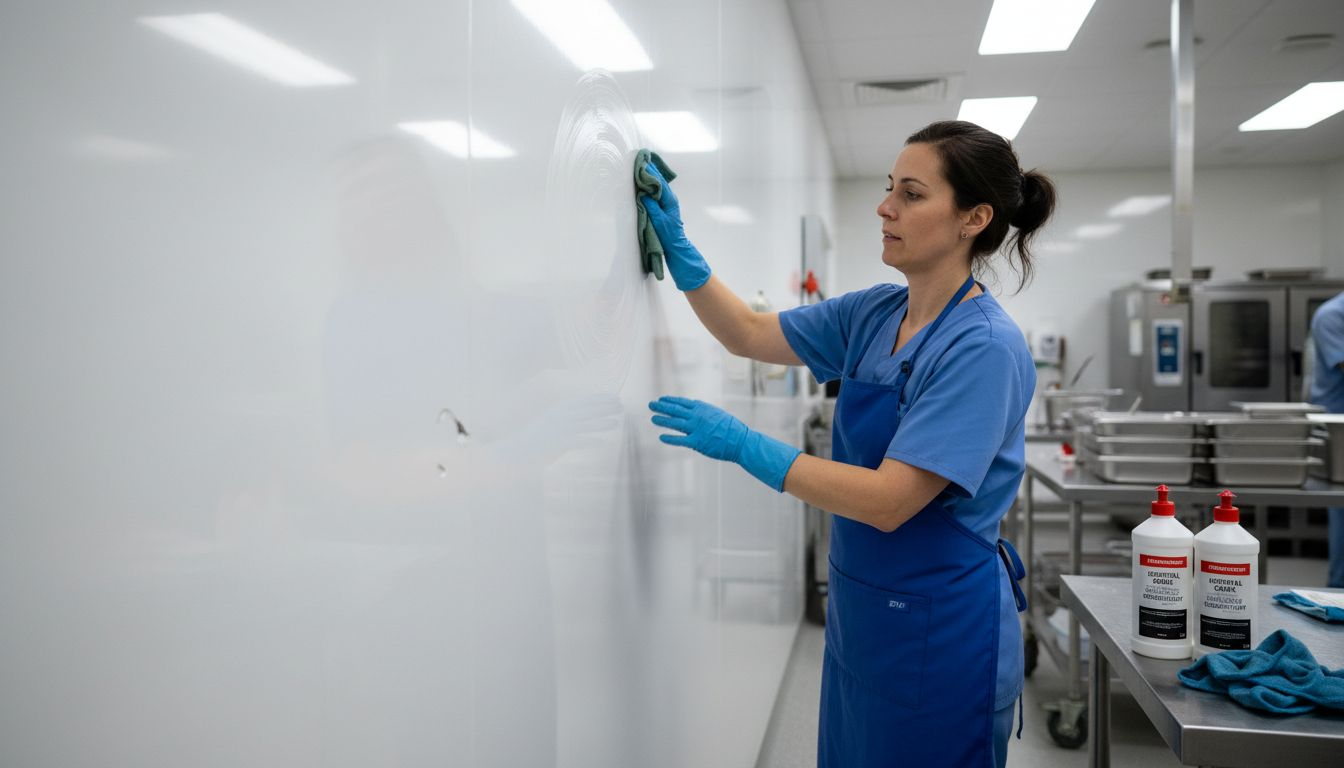
Chemical resistance ensures longevity under harsh disinfection regimes. Hospital-grade cleaners containing sodium hypochlorite, quaternary ammonium compounds, or hydrogen peroxide rapidly degrade unsuitable materials. Quality hygienic cladding withstands daily exposure to these agents without discolouration, surface crazing, or structural weakening.
Physical durability matters equally in demanding environments. Impact resistance prevents surface breaches from trolleys, equipment, or cleaning machinery. Even minor cracks compromise hygiene by creating bacterial refuges and moisture infiltration paths. Examining material properties important for hygiene clarifies how different polymers balance flexibility and hardness.
Surface gloss influences both hygiene and maintenance efficiency. High-gloss finishes reveal contamination immediately, facilitating prompt cleaning. They also shed residues more completely than textured surfaces, reducing the organic matter available for microbial growth. Semi-gloss finishes offer acceptable performance whilst minimising visible scratches in high-traffic areas.
Longevity under industrial cleaning protocols distinguishes premium systems from budget alternatives. Healthcare facilities may clean critical surfaces multiple times daily for years. Food processing areas endure hot water wash-downs, caustic detergents, and thermal shock. Materials must maintain structural integrity and hygienic properties throughout decades of service.
Key polymer choices include:
PVCu panels offering proven chemical stability and cost-effectiveness
PETG sheets providing superior impact resistance in equipment zones
Antimicrobial polymers incorporating silver ions or organic biocides
Composite systems layering protective finishes over structural cores
Surface preparation and finishing techniques further enhance hygiene. Factory-applied protective coatings increase scratch resistance, whilst polished surfaces minimise microscopic irregularities where bacteria colonise. Selecting materials engineered specifically for hygienic applications rather than adapting general building products ensures reliable long-term performance.
Installation Techniques Ensuring Seamless, Crack-Free Surfaces
Even superior materials fail when poorly installed. Professional installation techniques transform individual panels into continuous hygienic barriers that meet regulatory standards and deliver lasting protection.
Heat-welded joints form molecular seamless bonds that prevent bacterial ingress better than mechanical fixings. Hot air welding fuses adjacent panel edges at temperatures around 300°C, creating homogeneous joints stronger than the parent material. These molecular bonds eliminate gaps, crevices, and overlaps where moisture and pathogens accumulate.
Mechanical fixings and adhesive joints introduce hygiene vulnerabilities. Visible screws create surface discontinuities and potential corrosion sites. Adhesive bonds degrade under moisture exposure or thermal cycling, allowing bacterial infiltration. Silicone sealants, whilst waterproof, develop biofilms and require regular replacement.
Proper sealing at corners, edges, and service penetrations maintains surface integrity. Internal corners receive coved transitions eliminating right angles where dirt accumulates. External corners use heat-welded trims creating smooth radiused profiles. Penetrations for pipes, switches, and fixtures demand precision cutting and sealed flanges preventing gaps.
Professional installers skilled in welding techniques deliver consistent results. Apprentice-level errors like incomplete fusion, overheating causing material distortion, or misaligned joints compromise hygiene and aesthetics. Qualified contractors understand substrate preparation, panel conditioning, and quality control procedures ensuring compliant installations. Understanding installation best practices helps you evaluate contractor capabilities.
Critical installation steps include:
Substrate assessment and preparation ensuring flat, dry, stable mounting surfaces
Panel acclimatisation to ambient temperature preventing thermal expansion issues
Precise cutting and fitting minimising joints and maximising panel size
Hot air welding creating continuous molecular bonds at all seams
Post-installation inspection verifying seamless surfaces and proper edge finishing
Pro Tip: Include heat-welded seam requirements in project specifications and conduct site inspections during installation to prevent contractors reverting to faster adhesive methods.
Verifying welder credentials and requesting test samples before commencing work protects your investment. Quality installations should show invisible joints requiring close inspection to locate seams. Any visible gaps, ridges, or colour variations indicate substandard workmanship requiring correction before final acceptance.
Comparison with Traditional Wall Finishes
Understanding how hygienic wall systems outperform traditional finishes clarifies their value proposition for facility managers balancing budgets against hygiene requirements.
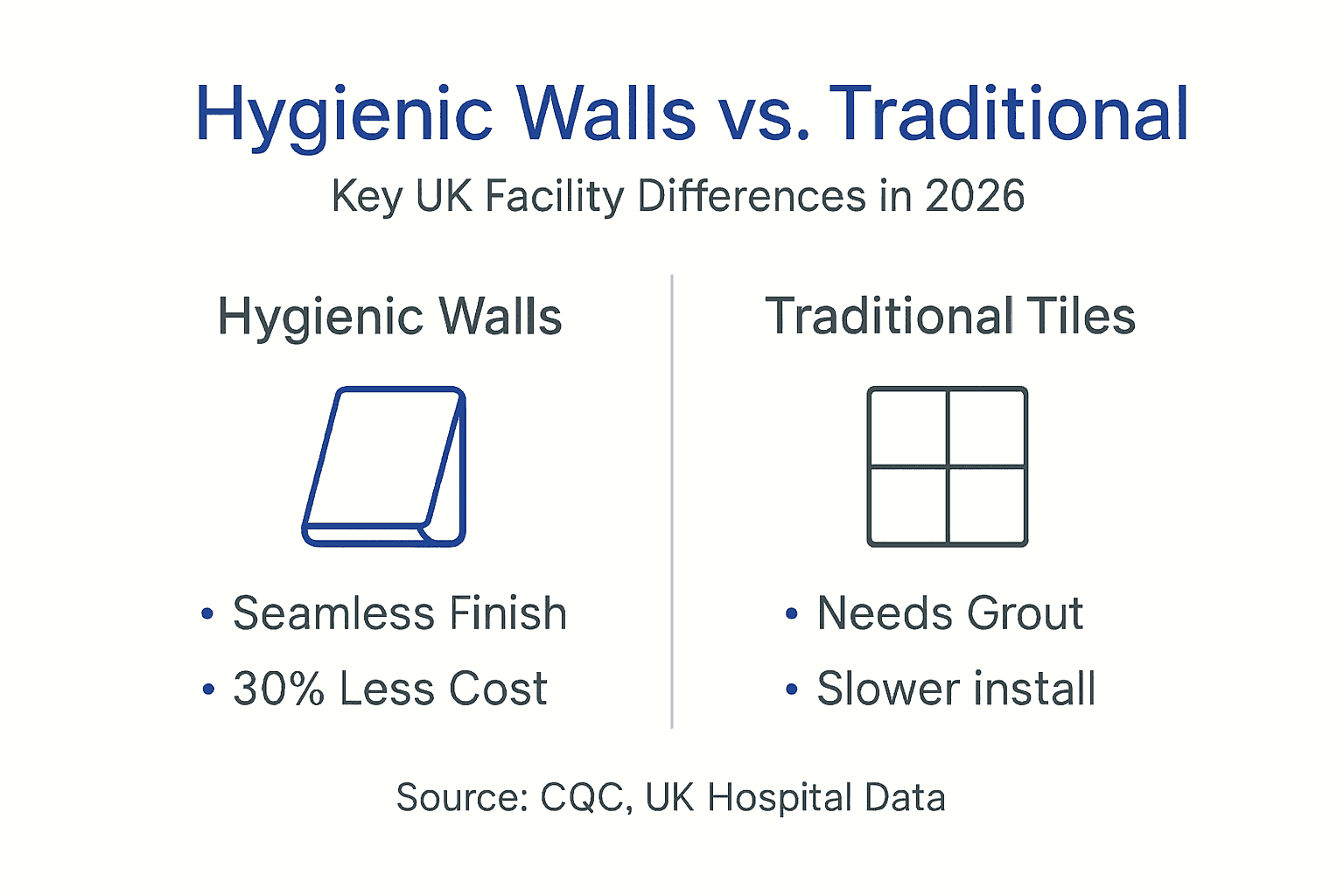
Ceramic tiles represent the conventional choice for washable surfaces in healthcare and food environments. However, grout lines introduce fundamental hygiene liabilities. Even epoxy grouts absorb moisture and develop microbial colonies requiring periodic removal and replacement. Cracked tiles create harbourage sites, whilst mechanical cleaning damages glazed surfaces over time.
Hygienic wall cladding delivers 30 to 40% maintenance cost reductions versus tiles across typical lifecycle periods. Seamless surfaces eliminate grout maintenance, reduce cleaning chemical consumption, and require less frequent deep cleaning interventions. Labour costs decrease substantially when surfaces can be effectively disinfected with simple wipe-down protocols.
Installation speed provides additional advantages. Tile installation progresses slowly, requiring substrate preparation, adhesive curing, grouting, and sealing across multiple site visits. Hygienic cladding systems install in single operations with immediate commissioning, minimising operational disruption and accelerating project completion. Comparing hygienic wall cladding vs tiles reveals substantial installation time differences impacting project scheduling and costs.
Surface Type | Hygiene Risk | Lifecycle Cost | Durability | Cleaning Efficiency |
Ceramic Tiles | High (grout lines harbour bacteria) | Higher (grout maintenance, replacement) | Moderate (cracks, chips) | Lower (intensive scrubbing needed) |
Painted Walls | Very High (porous, damage-prone) | Moderate (frequent repainting) | Low (moisture damage) | Very Low (cannot withstand disinfectants) |
Hygienic PVCu Cladding | Very Low (seamless, non-porous) | Lower (minimal maintenance) | High (impact-resistant, stable) | High (simple wipe-down effective) |
Stainless Steel | Low (smooth but costly) | Highest (initial investment) | Very High (corrosion-resistant) | High (scratches show residues) |
Durability advantages extend beyond hygiene. Hygienic cladding withstands impacts that crack tiles, resists chemical damage affecting painted surfaces, and maintains appearance without the maintenance burden of stainless steel. In demanding environments like hospital corridors or commercial kitchens, these performance differences directly impact operational costs and safety outcomes.
Key advantages of hygienic cladding systems:
Seamless installations eliminating bacterial harbourage points entirely
Rapid deployment reducing facility downtime and project schedules
Superior impact resistance preventing surface breaches from equipment strikes
Chemical stability maintaining properties under aggressive disinfection protocols
Lower total cost of ownership when initial investment and lifecycle costs combine
Traditional finishes persist mainly due to familiarity and lower perceived initial costs. However, informed facility managers increasingly recognise that upfront savings vanish rapidly when maintenance expenses and hygiene failures accumulate over facility lifespans.
Common Misconceptions About Hygienic Wall Systems
Several persistent myths deter facility managers from specifying optimal hygienic wall systems despite clear performance advantages. Addressing these misconceptions enables better procurement decisions.
Misconception: Hygienic panels cost too much for budget-conscious projects. Reality reveals that faster installation and dramatically lower maintenance expenses create favourable lifecycle economics. A system costing 40% more initially but reducing maintenance by 35% annually breaks even within three years, then generates savings for decades. Calculate total cost of ownership rather than fixating on purchase price.
Misconception: All wall cladding delivers equivalent hygiene if properly cleaned. This dangerous assumption ignores fundamental material differences. Only seamless, heat-welded systems with non-porous surfaces meet stringent healthcare and food safety standards. Standard PVC panels joined with adhesive or mechanical fixings create bacterial refuges no cleaning protocol eliminates. Regulatory compliance demands certified hygienic systems, not cosmetic approximations.
Misconception: Panels serve primarily aesthetic purposes with hygiene as secondary benefit. This reverses actual priorities. Hygienic wall systems exist fundamentally for infection prevention and contamination control. Visual appeal matters for patient and customer environments, but functionality drives specification. Choosing systems based on appearance rather than antimicrobial performance and regulatory compliance risks serious hygiene failures.
Misconception: DIY installation achieves acceptable results with cost savings. Professional installation represents a critical success factor, not optional overhead. Heat welding requires specialised equipment, training, and experience. Improper technique creates weak joints, visible seams, and hygiene vulnerabilities undermining the entire system. Certified installers deliver warranted installations meeting regulatory inspection standards.
Key realities to remember:
Lifecycle costs favour hygienic cladding over traditional finishes when properly analysed
Only heat-welded, certified systems deliver genuine hygienic performance
Infection control and regulatory compliance drive specification, not aesthetics
Professional installation protects your investment and ensures compliant outcomes
Pro Tip: Request case studies and total cost analyses from suppliers demonstrating actual lifecycle savings in comparable facilities before dismissing hygienic systems as unaffordable.
Questioning conventional wisdom and examining evidence-based performance data reveals that perceived barriers often reflect outdated assumptions rather than current market realities. Modern hygienic wall systems deliver measurable value across safety, compliance, and economic dimensions.
Practical Considerations and Buying Guidance
Translating technical knowledge into successful procurement requires systematic evaluation of needs, options, and suppliers. Follow these steps to specify and purchase hygienic wall systems that meet your facility requirements.
Assess your specific environment and contamination risks. Healthcare critical care areas demand highest-grade antimicrobial systems. Food processing zones require chemical resistance matching cleaning protocols. Identify traffic levels, impact exposure, and hygiene criticality for each installation area.
Choose materials compliant with applicable UK regulations. Verify HTM 63/66 compliance for healthcare applications. Confirm food-safe certifications for commercial kitchens and processing facilities. Request independent test reports documenting antimicrobial efficacy and chemical resistance.
Specify heat-welded installation in project documentation. Include welding requirements in tender specifications and contractor agreements. Reject proposals offering adhesive or mechanical fixing methods regardless of cost savings claimed. Insist on certified installers with proven healthcare or food industry experience.
Verify manufacturer certifications and product testing. Look for ISO 9001 quality management and ISO 14001 environmental certifications demonstrating professional operations. Request evidence of accelerated aging tests, chemical resistance studies, and antimicrobial performance validation from independent laboratories.
Plan for ongoing inspection and maintenance protocols. Establish cleaning procedures using approved disinfectants at recommended concentrations. Schedule periodic inspections identifying damage requiring repair before hygiene compromise occurs. Document maintenance activities demonstrating regulatory compliance.
Source complete systems including panels, trims, and accessories from unified suppliers. Mixing components from different manufacturers creates compatibility issues and warranty disputes. Integrated systems ensure proper fit, matching colours, and coordinated technical support. Reviewing hygienic wall cladding accessories clarifies required components.
Evaluate supplier technical support and aftermarket service capabilities. Confirm availability of replacement panels matching original installations years later. Verify that technical advisors understand your industry requirements and can recommend optimal solutions. Choose suppliers offering site surveys and specification assistance.
Request detailed quotations separating material, installation, and warranty costs. Compare lifecycle value rather than initial price alone. Investigate financing options spreading investment over multiple budget periods if upfront costs challenge available capital.
Selecting hygienic wall systems systematically rather than reactively ensures your facility receives appropriate protection matching actual needs and regulatory obligations. Investing time in proper specification prevents costly mistakes and premature system failures.
Explore Hygienic Wall Cladding Solutions for UK Facilities
Equipping your healthcare facility or food service operation with proven hygienic wall systems protects patients, customers, and your organisation’s reputation. Professional-grade PVC cladding engineered specifically for UK hygiene standards delivers reliable contamination control and regulatory compliance.
Browse comprehensive ranges of hygienic wall cladding products designed for demanding environments where cleanliness cannot be compromised. From hospital operating theatres to commercial kitchen prep areas, certified systems provide seamless protection backed by expert technical guidance. Discover how modern cladding technology transforms infection control whilst reducing long-term maintenance burdens. Explore installation accessories, specialist trims, and complete system packages supporting projects from small refurbishments to major new builds. Access practical resources including detailed PVC cladding installation guides to support your facility upgrades.
Frequently Asked Questions About Hygienic Wall Systems
What are the main maintenance needs to ensure hygienic wall system longevity?
Routine cleaning with approved disinfectants maintains surface hygiene without degrading materials. Periodic inspections identify any impact damage, edge lifting, or seal failures requiring prompt repair. Avoid abrasive cleaners or tools that scratch protective finishes and create bacterial harbourage sites.
How do heat-welded joints improve hygiene versus other joining methods?
Heat welding creates molecular bonds fusing adjacent panels into continuous surfaces without gaps or overlaps. Mechanical fixings leave screw holes and edges where bacteria colonise. Adhesive joints degrade under moisture and temperature changes, allowing microbial infiltration that seamless welded joints prevent entirely.
Can hygienic wall systems be customised for different environments like hospitals versus kitchens?
Yes, material formulations and surface treatments adapt to specific requirements. Healthcare systems emphasise antimicrobial additives and chemical resistance to hospital disinfectants. Food industry systems prioritise resistance to acids, oils, and thermal shock from wash-down protocols. Colour and finish options suit each environment whilst maintaining core hygienic performance.
What certifications should I look for when selecting hygienic wall panels?
Verify HTM 63 and HTM 66 compliance for healthcare applications. Confirm food-safe certifications for commercial kitchens. Request ISO 9001 quality management certification from manufacturers. Insist on independent antimicrobial testing reports and chemical resistance data from accredited laboratories documenting actual performance rather than marketing claims.
How quickly can hygienic wall cladding be installed compared to traditional tiles?
Hygienic cladding installs in single operations with immediate commissioning, typically completing in one-third the time required for ceramic tiles. Tile installation demands multiple visits for substrate preparation, adhesive curing, grouting, and sealing. Faster deployment reduces operational disruption and accelerates facility upgrades, particularly important in healthcare settings where areas must return to service quickly.
Recommended


Comments